

ANSI/ISEA 105-2024 represents the latest evolution of the primary North American voluntary consensus standard for classifying the performance of hand and arm protection. Released in November 2024 by the International Safety Equipment Association (ISEA), it builds on prior editions (notably the transformative 2016 revision) to deliver greater uniformity, clarity, and transparency in how protection levels are communicated and selected.
For Workplace Health and Safety (WHS), Occupational Health and Safety (OHS), and Compliance Managers operating in the American market, this standard is foundational. OSHA does not mandate a specific glove performance standard but requires employers to select hand protection based on the hazards present and the performance characteristics of the PPE relative to those hazards (29 CFR 1910.138). ANSI/ISEA 105 provides the objective, test-based framework that makes defensible selection, risk assessments, training, and procurement possible.
The changes highlighted—particularly the harmonized (standardized) pictogram, the A1–A9 cut scale, and the standalone conductive heat pictogram—address longstanding issues of inconsistent labeling, insufficient granularity in higher-protection categories, and the need to keep pace with advanced materials and real-world injury data.
Hand and arm injuries remain among the most frequent and costly workplace incidents; proper selection and consistent wear can prevent a substantial portion of them.
Historical Context and Drivers of Change
ANSI/ISEA 105 originated in 1999 and has been revised periodically (2005, 2011, 2016, and 2024). Early versions used broader performance bands and allowed multiple cut-test methods (including the CPPT machine), which introduced variability. By the mid-2010s, yarn and coating technologies had advanced dramatically—high-performance fibers, composite yarns, and engineered coatings produced gloves with far higher cut resistance than the old five-level scale could meaningfully differentiate.
The 2016 revision addressed this by:
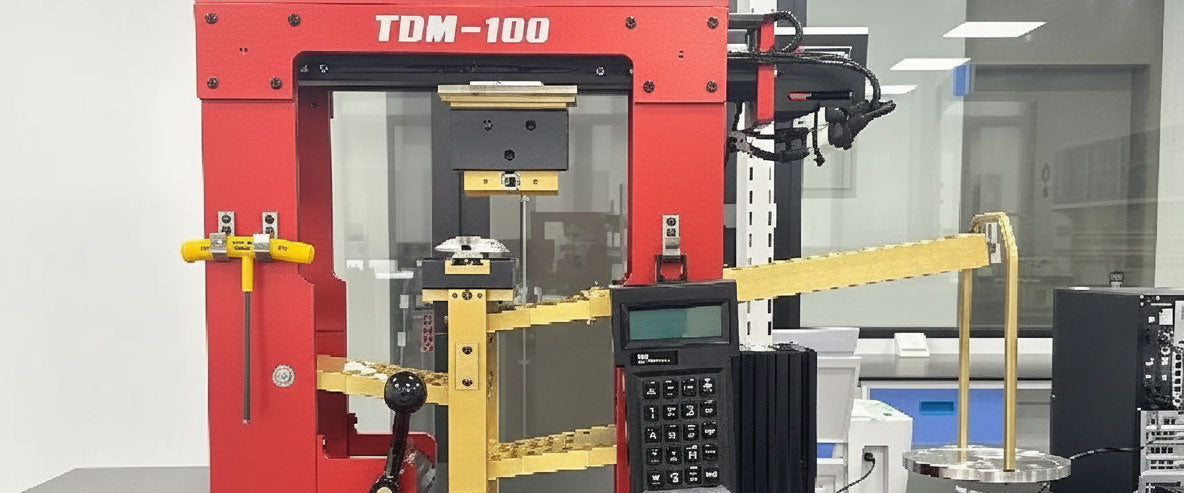
Adopting a single, more reproducible test method (ASTM F2992 using the TDM-100 tomodynamometer).
Expanding cut resistance from five levels to nine (A1–A9) to close large gaps (especially the old Level 4 span of roughly 1,500–3,499 grams) and to differentiate emerging ultra-high-performance materials.
Adding a needlestick puncture classification and updating other referenced methods for better international alignment where feasible.
The 2024 edition (the sixth overall) does not overhaul the core mechanical performance scales or primary test methods for cut, abrasion, or puncture. Instead, it focuses on product transparency and usability. Prior to 2024, manufacturers used proprietary shields, icons, and layouts. This created comparison friction for buyers, distributors, and end users, increasing the risk of mismatched protection. The new standardized pentagon pictogram, expanded scope to arm protection (sleeves), refined conductive heat criteria, stronger conformity language (referencing ANSI/ISEA 125-2021), and updated test method references collectively reduce ambiguity.
These updates were necessary because materials and workplace hazards continue to evolve. Finer differentiation and clear, consistent labeling enable more precise matching of PPE to residual risk, support better training and audits, and foster greater user confidence—directly supporting higher compliance rates.
The A1–A9 Cut Resistance Scale: Granularity for Accurate Selection
Cut resistance remains the most scrutinized mechanical property. Under ANSI/ISEA 105 (2016 and confirmed in 2024), performance is classified A1 through A9 based on the load (in grams) required to cut through the material using ASTM F2992 (currently referenced as the 15 or updated 23 version). The TDM-100 machine draws a straight blade a fixed 20 mm distance across the specimen under controlled loads. Multiple cuts at different loads are averaged; a new blade is used for each cut to control for dulling.
Standard classification (consistent across authoritative sources):
| Level | Cutting Load (grams) | Typical Hazard Context |
| A1 | ≥ 200 – 499 | Light: packaging, assembly, warehouse handling of non-sharp materials |
| A2 | ≥ 500 – 999 | Light–medium: general handling, light automotive, packaging with mild edges |
| A3 | ≥ 1,000 – 1,499 | Light–medium: small parts with edges, construction materials |
| A4 | ≥ 1,500 – 2,199 | Medium: glass handling, HVAC, light metal fabrication |
| A5 | ≥ 2,200 – 2,999 | Medium–high: metal fabrication, appliance manufacturing |
| A6 | ≥ 3,000 – 3,999 | High: sharper metal, recycling, heavier fabrication |
| A7 | ≥ 4,000 – 4,999 | Higher: metal stamping, window manufacturing, aerospace |
| A8 | ≥ 5,000 – 5,999 | Very high / extreme: heavy stamping, protein processing, sharp recycling |
| A9 | ≥ 6,000 | Extreme: highest-risk blade and edge exposures |
The expansion to nine levels was driven by the need for product transparency and risk-appropriate selection. The previous five-level system forced many high-performing gloves into a single broad “Level 4” or “Level 5,” creating either over-specification (unnecessary cost, reduced dexterity) or under-protection. The A-prefix explicitly signals compliance with the post-2016 methodology, distinguishing it from older numeric ratings or European EN 388 letter ratings (A–F).
Important technical notes for managers:
Ratings are material- and construction-specific; the same base yarn can perform differently depending on gauge, coating, and layering.
ANSI A1–A6 roughly align with EN 388 TDM levels A–F (force in newtons; ~102 g ≈ 1 N), but ANSI continues to A9 while EN 388 caps at F (~30 N / ~3,000 g). Higher ANSI levels therefore provide differentiation that the European scale does not.
Test results are laboratory values under controlled conditions; real-world performance depends on edge sharpness, contact force, angle, lubrication, and glove condition. Always combine ratings with job hazard analysis.
The Harmonized Pentagon Pictogram: Standardization for Transparency
The single most visible change in ANSI/ISEA 105-2024 is the mandatory standardized marking format for the three primary mechanical properties when claimed: cut, abrasion, and non-needlestick puncture.
Structure of the pictogram:

A pentagon (sometimes described as home-plate shaped) with even angled sides.
• Title “ANSI/ISEA 105” (year optional on product/packaging; recommended on technical literature) centered above.
• Cut rating (A1–A9 or X) in the top center (larger typeface for emphasis).
• Abrasion rating (0–6 or X) on the left.
• Puncture rating (0–5 or X) on the right.
• An “X” indicates the property was not tested or is not claimed.
Prior manufacturer-specific icons made side-by-side comparison difficult and increased the chance of selecting inadequate protection. The uniform layout allows rapid visual assessment across brands, supports clearer specification sheets and procurement language, and reduces training burden. Markings must remain legible for the useful life of the product (or appear on packaging/documentation when direct marking is impractical due to material characteristics).
Abrasion levels (cycles to failure using ASTM D3389 for coated materials or D3884 for uncoated/leather, under specified loads) run 0 (<100 cycles) to 6 (≥20,000 cycles). Higher levels indicate longer service life under frictional wear.
Puncture levels (force in newtons required to penetrate with a standardized non-hypodermic probe) run 0 (<10 N) to 5 (≥100 N or higher thresholds depending on exact criteria). Separate needlestick testing exists for hypodermic threats.
This consolidation into one pictogram is the core “harmonization” element—creating a common visual language that enhances transparency without altering the underlying performance data.
Conductive Heat Resistance: Standalone Pictogram and Refined Criteria
Conductive (contact) heat protection is deliberately kept outside the mechanical pentagon and displayed via a standalone shield or pictogram. This separation prevents visual clutter and clearly signals thermal-specific performance.
Testing follows ASTM F1060 (evaluation of conductive and compressive heat resistance). Performance is classified by the contact temperature at which the material provides at least 15 seconds before a predicted second-degree burn and at least 4 seconds of “alarm” (pain) time, with additional pass criteria regarding absence of charring, ignition, melting, dripping, separation, or excessive shrinkage (>5%).
Typical classification levels:
| Level 0 / unrated | Below 80°C (176°F) |
| Level 1 | 80°C (176°F) |
| Level 2 | 140°C (284°F) |
| Level 3 | 200°C (392°F) |
| Level 4 | 260°C (500°F) |
| Level 5 | 320°C (608°F |
The 2024 revision refined the classification process to include temperature ranges during testing and more prescriptive criteria for determining the level. Testing is typically performed on the palm; ratings do not automatically guarantee equivalent performance on the back of the hand or cuff. Managers must still consider the full thermal hazard profile (radiant, convective, and contact) and whether secondary protection (sleeves, aprons) is required.
Keeping conductive heat as a standalone mark preserves clarity: mechanical ratings address cuts/abrasion/puncture, while the heat mark addresses a distinct physical hazard.
Additional 2024 Scope and Process Changes
Scope expansion:
Explicitly covers arm protection (sleeves) in addition to gloves, mittens, and partial hand coverings.
Conformity assessment:
Stronger language requiring manufacturers to demonstrate claims via approaches defined in ANSI/ISEA 125-2021 (levels of testing and third-party involvement scale with claim rigor).
Removal from main body:
Dexterity and vibration-reduction properties are no longer formally classified in the standard body but are discussed in an appendix as other factors for consideration.
Test method updates:
References updated to current editions (e.g., abrasion and cut methods) for consistency with state-of-the-art procedures and, where possible, international alignment.
Proper referencing:
Manufacturers should use the full “ANSI/ISEA 105-2024” designation; the ANSI mark itself must not be used in a way that implies ANSI product certification or approval.
Chemical permeation/degradation, ignition/burning behavior, and heat degradation remain part of the broader classification system but are not folded into the mechanical pentagon.
Why These Changes Strengthen Product Transparency and Safety Outcomes
Material and technology evolution outpaced the old coarse scales and proprietary labeling. Finer cut levels and a single visual language allow buyers to specify exactly what is needed rather than over- or under-protecting.
Human factors and compliance:
Confusing or inconsistent markings contribute to incorrect selection and reduced wear rates. Uniform pictograms lower cognitive load at the point of use and during audits.
Risk management and liability:
Documented, standardized performance data supports more robust job hazard analyses, written PPE programs, and defensible decisions if incidents occur.
Supply-chain efficiency:
Distributors and multi-site organizations can compare products apples-to-apples, simplifying inventory rationalization and training.
Alignment with broader safety goals:
Better matching of protection to hazard reduces the frequency and severity of lacerations, punctures, abrasions, and contact burns—the very injuries that drive lost-time and medical costs.
Practical Guidance for WHS/OHS and Compliance Managers
Update PPE selection matrices and written programs to reference ANSI/ISEA 105-2024 ratings and the new pictogram.
Train supervisors and workers to read the pentagon and standalone heat mark; incorporate into toolbox talks and new-hire orientation.
When specifying or bidding, require the full standard reference and, where critical, evidence of conformity assessment level.
Verify that existing inventory carries accurate claims; phase in newly marked product as stock turns.
Combine ratings with task-specific risk assessment—never select solely by the highest number. Dexterity, grip, comfort, chemical compatibility, and secondary hazards still matter.
Cross-check dual-marked products (ANSI + EN 388) carefully; the scales are related but not identical at the high end.
Monitor manufacturer technical data sheets for the year of the standard claimed and any “X” entries.
ANSI/ISEA 105-2024 does not reinvent cut, abrasion, or puncture testing. It completes the transparency and usability work begun in 2016 by giving the American market a single, unambiguous visual language for the most commonly claimed mechanical properties, refining thermal classification, expanding coverage to arm protection, and reinforcing conformity expectations. For compliance and safety professionals, the result is clearer decision-making tools, reduced selection error, and stronger support for the core OSHA principle that protection must match the hazard.
Adopt the new pictogram and A1–A9 framework as the baseline language in your programs. Pair laboratory ratings with thorough worksite analysis, user feedback, and ongoing incident review. That combination—standardized performance data plus disciplined application—delivers the product transparency and injury reduction the revisions were designed to achieve.
Share:
OSHA 29 CFR 1910.138 - Hand Protection: A Comprehensive Guide for WHS, OHS, and Compliance Managers